
The Proven Holistic Psychiatry Framework: How Movement + Medication Actually Works Together
- Antoinette Goosby
- Jan 5
- 5 min read

You've probably been there, sitting in your dorm room at 2 AM, scrolling through conflicting advice about mental health treatment. One article says medication is essential, another swears by yoga and meditation, and you're left wondering: do I have to pick a side?
Here's the thing that might surprise you: you don't. In fact, the most effective approach to mental health often combines both traditional psychiatric medication and movement-based therapies. As a holistic psych NP, I've seen firsthand how this integrated approach can transform lives, especially for college students and young adults navigating the intense pressures of early adulthood.
The False Choice That's Holding You Back
Let's clear up a major misconception right away. The idea that you have to choose between "natural" approaches like movement therapy and "medical" treatments like medication is outdated, and honestly, it's not serving anyone well.
Modern holistic psychiatry recognizes that your brain, body, and emotions are interconnected systems. When we treat them together rather than separately, we see better outcomes, fewer side effects, and more sustainable healing. Think of it like this: if your car has both engine problems and flat tires, you wouldn't fix just one and expect it to run perfectly, right?
The same principle applies to your mental health. Medication can stabilize brain chemistry while movement therapy helps regulate your nervous system and process emotions. They're not competing, they're collaborating.
How the Science Actually Works
The research behind combining movement and medication is pretty compelling. Here's what's happening in your brain and body when you use both approaches:
Medication works "bottom-up", it directly targets neurotransmitters like serotonin, dopamine, and norepinephrine to help stabilize your mood, reduce anxiety, or improve focus. This creates a neurochemical foundation that makes other interventions more effective.
Movement therapy works "through the body and nervous system", it teaches your body how to regulate stress responses, process emotions, and build resilience from the ground up. When you engage in mindful movement like dance therapy, yoga, or even structured exercise, you're literally rewiring your nervous system's response to stress.
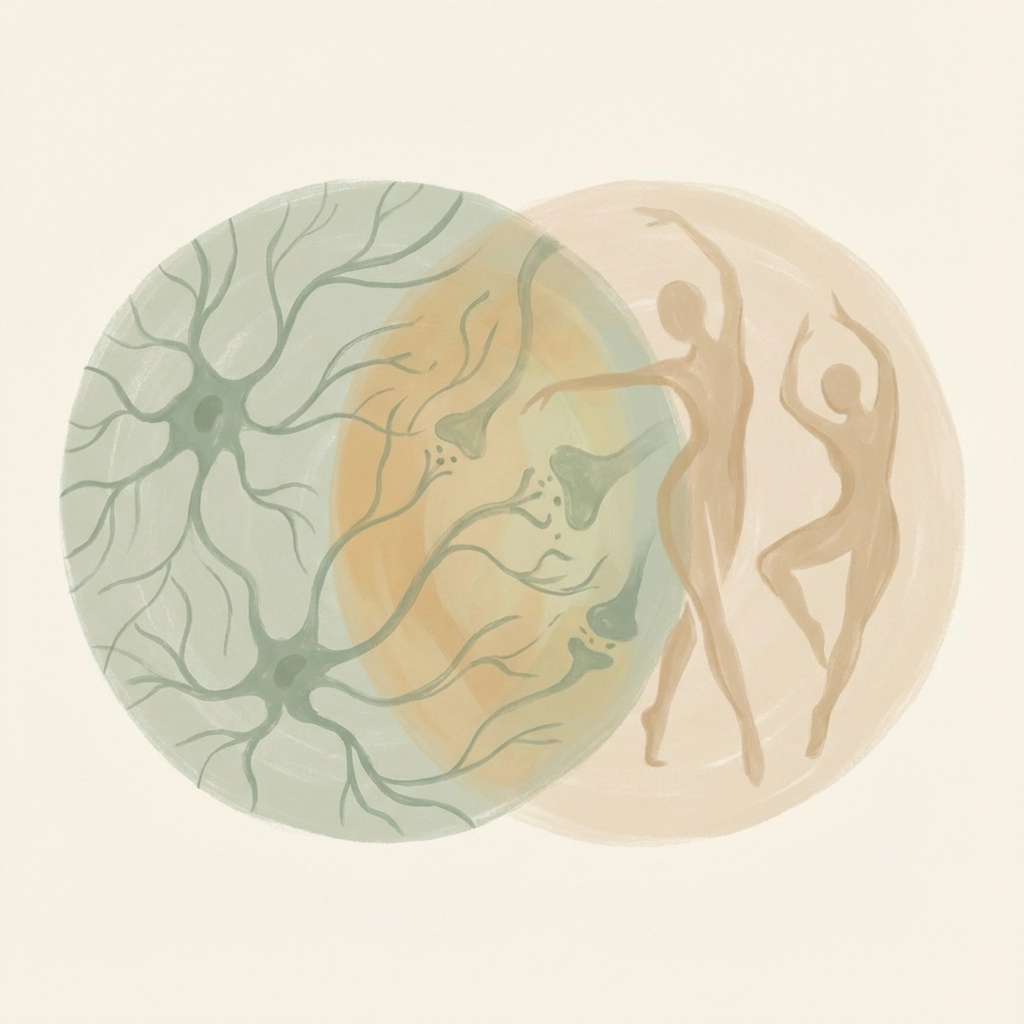
What's fascinating is that these two approaches actually enhance each other. Studies consistently show that people who combine medication with movement practices like yoga and meditation experience better treatment outcomes and lower relapse rates. The movement doesn't interfere with medication, it amplifies its effectiveness.
The Real-World Framework for College Students
So what does this look like in practice? As a PMHNP working with young adults, I've developed a framework that makes this integration practical and sustainable for busy college life.
Phase 1: Establish Your Foundation
Start with medication if that's what you and your healthcare provider decide is right for you. This isn't about becoming dependent on medication forever, it's about creating enough neurochemical stability so that you can effectively engage with other healing modalities.
Think of it like learning to ride a bike. Training wheels don't make you a worse cyclist; they give you stability while you develop balance and confidence. Medication can work similarly, providing support while you build other coping skills.
Phase 2: Introduce Movement Gradually
Once you have some baseline stability (this could be weeks or months, depending on your situation), start incorporating movement that feels good to your body. For college students, this might look like:
5-10 minutes of morning stretching before classes
Walking meditation between study sessions
Dance parties in your dorm room (yes, really: dancing releases endorphins and helps process emotions)
Yoga or tai chi classes offered through your campus recreation center
The key here isn't intensity: it's consistency and mindfulness. You're not training for a marathon; you're training your nervous system to handle stress more effectively.
Phase 3: Develop Body Awareness
As you become more comfortable with regular movement, start paying attention to how your body holds stress and emotion. Notice where tension shows up when you're anxious. Observe how different types of movement affect your mood.
This awareness becomes incredibly valuable information for both you and your holistic psych NP. Maybe you notice that your medication works better on days when you've moved your body. Or perhaps you discover that certain movements help you process emotions that feel "stuck."
Practical Integration Strategies That Actually Work
Here's where the rubber meets the road: specific ways to blend movement and medication in your daily life:
Morning Protocol
Take medication at the same time each day (consistency helps both your brain chemistry and your routine)
Follow with 5-10 minutes of gentle movement: stretching, yoga, or even dancing to your favorite song
This combination helps both the medication and movement become integrated into your circadian rhythm
Stress Response Toolkit
When you feel overwhelmed (hello, finals week), you have multiple tools:
Your medication provides baseline stability
Quick movement breaks (even 2-3 minutes of deep breathing with gentle stretches) help regulate your immediate stress response
This combo is often more effective than relying on either approach alone
Evening Wind-Down
Light movement like restorative yoga or gentle stretching can help process the day's stress
This supports both your medication's effectiveness and your natural sleep rhythms
Better sleep = better mental health = better medication response
Working with a Maryland Psych NP Who Gets It
If you're in Maryland and looking for a provider who understands this integrated approach, here's what to look for in a Maryland psych NP:
They ask about your relationship with movement and exercise, not just your symptoms
They're curious about your whole lifestyle: sleep, nutrition, stress patterns, social connections
They see medication as one tool in a larger toolkit, not the only solution
They collaborate with you to find the right balance rather than imposing a one-size-fits-all approach
The goal isn't to stay on medication forever or to replace it entirely with movement: it's to find the combination that helps you thrive. For some people, that might mean using medication temporarily while building other skills. For others, it might mean long-term medication support alongside regular movement practices. There's no "right" way except the way that works for you.
Getting Started: Your Next Steps
Ready to explore this integrated approach? Here's how to begin:
Remember, this isn't about perfection. Some days you'll take your medication and barely move from your desk. Other days you might forget your medication but have an amazing dance session. The goal is progress, not perfection, and building a sustainable approach that supports your mental health throughout the ups and downs of college and beyond.
Your mental health deserves a comprehensive approach that honors both the biological and psychological aspects of healing. When movement and medication work together, they create a foundation for not just managing symptoms, but actually thriving.
If you're ready to explore how this integrated approach might work for you, consider booking a consultation to discuss your unique needs and goals. Your future self: the one who's learned to navigate stress with both neurochemical support and body wisdom( will thank you for taking this step.)
Comments