
Minnesota Is Holding Its Breath: After the Killing of Nurse Alex Pretti
- Antoinette Goosby
- Jan 25
- 6 min read

This is an immediate response to yesterday’s news out of Minnesota: nurse Alex Pretti was killed during an ICE-related incident.
I keep trying to move on to the next task, the next email, the next normal thing—and then I remember Alex Pretti’s name. And everything goes quiet again.
If you feel shocked, tense, nauseated, numb, or weirdly blank (like your brain can’t find the right file for this), that makes sense. When something this specific happens—when a healthcare worker is the one who doesn’t make it home—it can land with a different kind of weight.
There’s also the silence after. The heavy pause. The way the air in the room feels thicker. The way conversations get smaller.
This post isn’t about solutions. It’s not about fixing anything. It’s about naming what’s here today: fear, grief, and that stunned stillness that follows a headline like this.
The Quiet After the Headline
In Minnesota, this is immediate and local. It’s hospitals and families and coworkers staring at their phones, trying to understand how this happened.
And even if you’re here with me in Maryland, it can still hit like it happened down the street. That’s the thing about being a caregiver (or a student becoming one): when one of our own is killed, the distance doesn’t protect you. It just delays the impact.
We wrote about Renee Nicole Good not long ago—a life lost, a community left reeling. And now, another name: Alex Pretti. Another story cut short. This time, a nurse.
There's something about repetition that makes trauma stick differently. The first loss breaks you open. The second one finds you already cracked. It seeps into places you didn't know were vulnerable.
If you feel like you "should" be handling this better because it's not the first time, I want to gently push back on that. Cumulative grief doesn't make you stronger. It makes you tired. And that tiredness is valid.
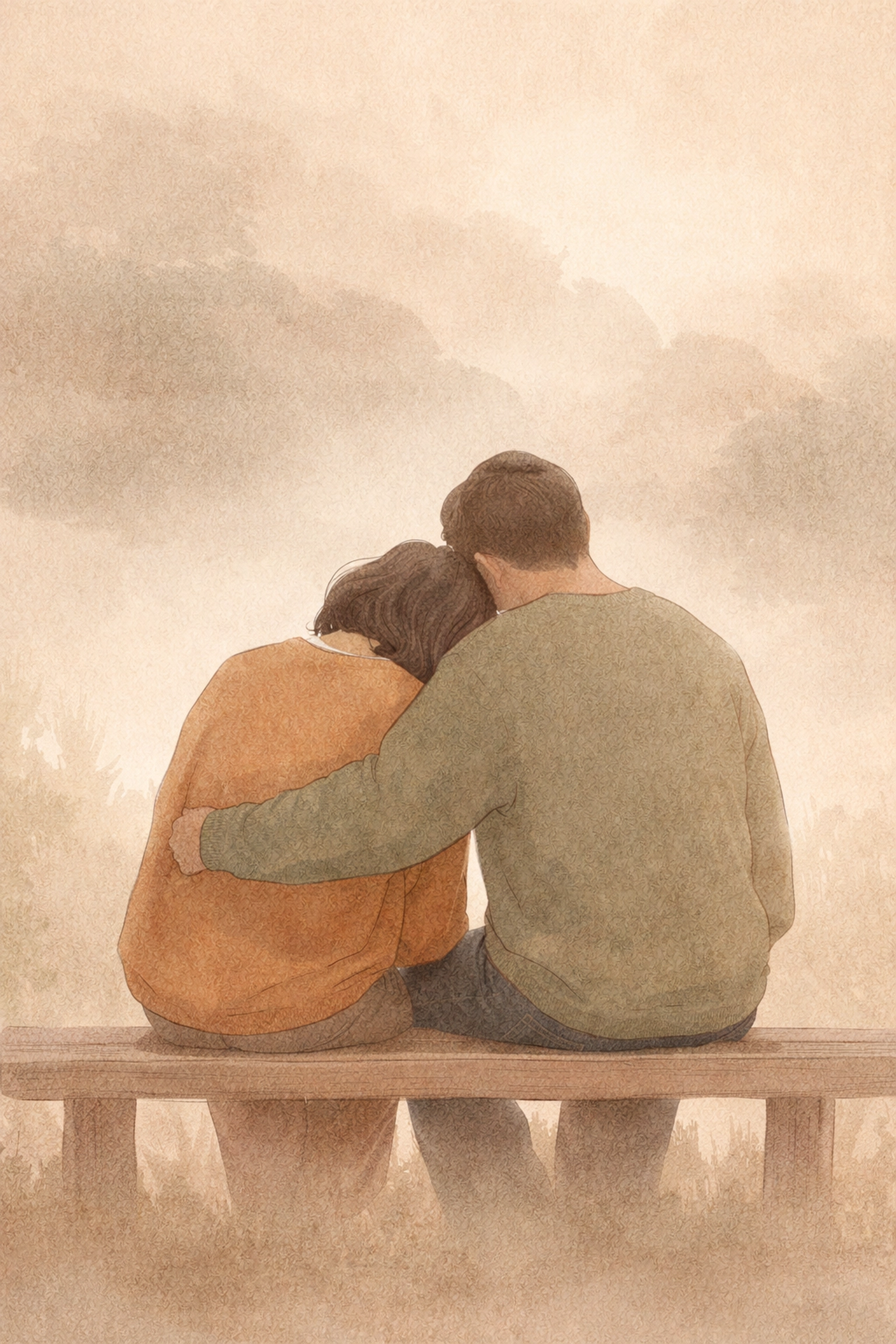
When the "Safe" Ones Aren't Safe
Here's what makes this particular kind of loss so disorienting: nurses are supposed to be protected. Caregivers are supposed to be off-limits. There's an unspoken social contract that says if you dedicate your life to helping others, you get to be safe.
Except that's not true. And maybe it never was.
The data tells a story that most people outside of healthcare don't see. According to research from the National Violent Death Reporting System, nearly 950 healthcare professionals were killed between 2003 and 2020, and almost 80% of them were women. One in four nurses has reported being physically assaulted at work. Non-fatal violence against healthcare workers increased by more than 60% in the years leading up to the pandemic.
These aren't just statistics. They're people. Colleagues. Friends. The nurse who checked your vitals, who remembered your name, who held your hand when you were scared.
When someone in a "caring" role is killed, it doesn't just create grief, it creates a rupture in our sense of how the world is supposed to work. It makes us question: if they weren't safe, who is?
That question can sit in your body like a stone.
What Your Body Might Be Doing Right Now
If you've been following the news about this loss, or even just catching glimpses of it on social media, your nervous system has been taking notes. It doesn't matter if you knew the nurse personally. Collective trauma doesn't require a personal connection. It just requires being human, being part of a community, being someone who cares.
Here's what I've been noticing in myself and in the people around me:
The freeze. Not the kind where you literally can't move, but the kind where you feel foggy. Disconnected. Like you're watching yourself go through the motions of your day from somewhere slightly outside your body. This is your nervous system's way of protecting you from feeling too much at once.
The hyper-vigilance. Maybe you've been checking the news more than usual. Maybe you've been more jumpy, more easily startled. Maybe you've been running through worst-case scenarios in your head without meaning to. Your body is on alert, scanning for threats, trying to keep you safe.
The heaviness. This one's hard to describe. It's not quite sadness, not quite exhaustion. It's more like carrying something invisible that weighs more than it should. Getting out of bed takes more effort. Conversations feel harder. Everything requires a little more.
If any of this sounds familiar, you're not broken. You're responding. Your body is doing exactly what bodies do when they encounter something overwhelming.

You're Allowed to Not Be Okay
I want to say this clearly, because I think we all need to hear it:
You are allowed to not be okay right now.
You don't have to have it together. You don't have to be "strong" for anyone. You don't have to perform resilience or pretend that you've processed this when you haven't.
If you're a healthcare worker, a nursing student, a caregiver of any kind, you're allowed to feel afraid. You're allowed to feel angry. You're allowed to feel numb. You're allowed to feel all of it at once, or nothing at all, or something that shifts every hour.
Grief doesn't follow rules. Neither does trauma.
And if you're someone who works in a field where you're supposed to be the calm one, the steady one, the one who holds space for everyone else, this might feel especially hard. Because who holds space for you?
That's a real question. And it deserves a real answer, even if you don't have one yet.
Small Ways to Come Back to Your Body
I'm not going to give you a list of "wellness tips" or tell you to practice self-care. That feels hollow right now, and I don't think it's what any of us need.
But I do want to offer a few gentle invitations. Not because they'll fix anything, but because when we're swimming in collective grief, sometimes it helps to have something small to hold onto.
Notice your feet. Right now, as you're reading this. Can you feel them? Can you press them into the floor and feel the ground pushing back? This isn't a meditation exercise. It's just a reminder that you're here, in a body, in this moment.
Let your exhale be longer than your inhale. You don't have to do breathing exercises. Just, when you remember, let the air out slowly. Your nervous system responds to this. It's not magic, but it helps.
Move if you can. Not because exercise is good for you, but because grief gets stuck. It sits in our shoulders, our jaw, our hips. Sometimes a walk around the block, or shaking your hands out, or even just stretching your arms overhead can help the heaviness shift, even a little.
Give yourself permission to step away. From the news. From social media. From conversations that drain you. You don't have to stay informed every second. You're allowed to protect your nervous system.

For My Fellow Caregivers
If you work in healthcare, if you're a nurse, a therapist, a social worker, a student in any of these fields, I want to speak directly to you for a moment.
This one hits different for you. I know it does.
Because when a nurse is killed, it's not just a tragedy. It's a mirror. It's a reminder that the work you do, the work you love, the work you've built your life around, comes with risks that most people don't understand.
Research shows that workplace violence causes an estimated 17% of nurses to leave their jobs each year. That's not weakness. That's survival. And if you've ever thought about leaving, or felt guilty for thinking about it, please know that you're not alone.
You can love your work and also be terrified by it. You can be committed to your patients and also exhausted by the system. You can grieve a colleague you never met because you understand, in your bones, what their days looked like.
Your fear is not irrational. Your grief is not an overreaction. Your body is telling you the truth.
Holding Space Together
I don't have a neat conclusion for this. There's no ribbon to tie around this kind of loss.
What I do have is this: we're here. Together. Reading the same words, feeling some version of the same heaviness, trying to make sense of something that doesn't make sense.
If you're in Maryland, you might feel this in a specific way: like the ground is still shaky from what we’ve already carried—and now a tragedy in Minnesota is echoing all the way into our classrooms, our units, our commutes, our bodies.
These are our people. And when one of us falls, we all feel it.
So for now, let's just be here. Let's let this be hard. Let's not rush toward healing or closure or moving on.
Sometimes the most radical thing we can do is simply acknowledge what's true: this hurts. And we're allowed to hurt together.
If you need support processing collective trauma, grief, or the weight of working in healthcare right now, please reach out to someone you trust. You don't have to carry this alone.
Comments